
Why Flashing Should Be Replaced During a Roof Replacement
When planning a roof replacement, homeowners often focus on shingle color, material quality, and price. Flashing rarely gets the same attention. Yet these small components help protect some of the roof’s most vulnerable areas.
Flashing directs water away from joints, edges, and openings where roofing materials alone cannot provide complete protection. Replacing worn or unsuitable flashing during reroofing helps prevent an older weak point from undermining a new roof.
What Does Roof Flashing Do?
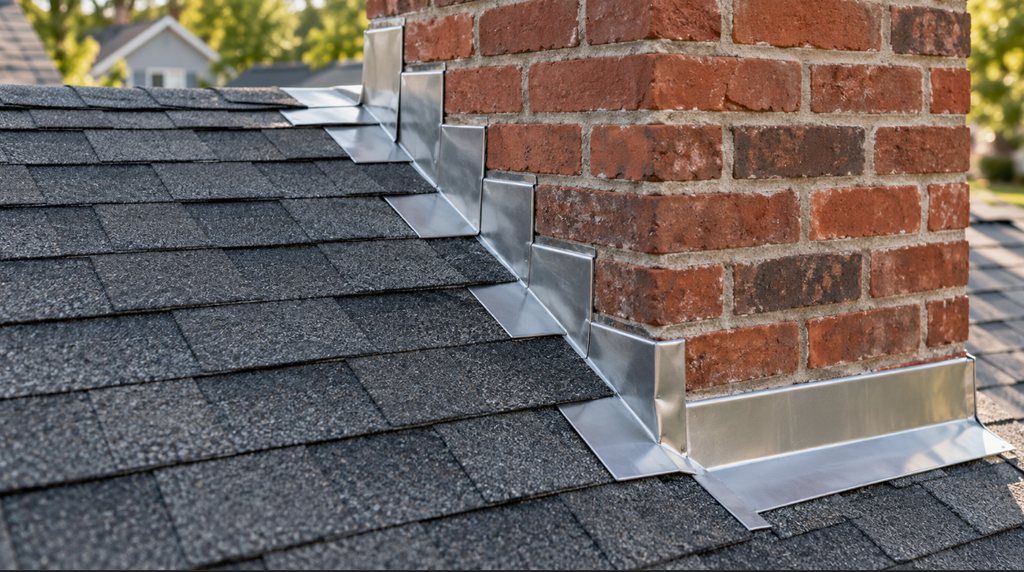
Flashing is commonly installed around chimneys, plumbing vents, skylights, roof valleys, and places where the roof meets a wall.
Different locations need different details. Step flashing works with successive shingle courses along sidewalls. Counterflashing overlaps underlying flashing to help keep water from entering behind it. Pipe flashing seals around roof penetrations.
These parts must work together with shingles, underlayment, and wall materials. Simply adding metal or spreading sealant around a joint does not establish a reliable drainage path.
Old Flashing May Have Hidden Damage
Flashing can develop corrosion, cracks, holes, or distorted edges over time. Previous repairs may also leave layers of roofing cement that hide its condition.
Some problems remain concealed beneath shingles or behind siding. A roof that has not visibly leaked can still have deteriorated components.
During tear-off, existing flashing may suffer additional damage as fasteners and surrounding materials are removed. Reusing a bent or torn piece can create a problem that was not there before.
New Roofing May Need Different Flashing
Replacement shingles may differ in size or exposure from the old ones. Existing step flashing must match the requirements of the new roof covering.
Flashing that looks sound may therefore still be unsuitable. Its dimensions, placement, and overlap all matter.
Published installation guidance recommends checking flashing compatibility and replacing pieces that do not meet the new roofing system’s requirements. Looking clean is not enough. Technical guidance on flashing reuse
Replacement Creates a Better Inspection Opportunity
Removing old flashing gives the contractor access to areas that are otherwise difficult to examine. That can reveal damaged decking, moisture staining, or problems around a roof opening.
Finding these issues during replacement allows them to be addressed before new materials cover the area.
It also provides an opportunity to correct poorly arranged drainage details. New flashing still needs proper installation, though. Replacing the metal without correcting an underlying installation problem may leave the same leak risk.
Later Repairs Can Disturb the New Roof
If reused flashing fails after the project, repairing it may require lifting shingles or opening nearby siding. That means another service visit and possible disruption to recently installed materials.
Including necessary flashing replacement in the original scope can avoid some of that repeat work.
Ask for an itemized proposal. A lower estimate may exclude chimney work, wall access, or certain flashing components that another contractor has included.
Does Every Piece Always Need Replacement?
Not necessarily. Some sound metal flashing may be reusable when its condition, remaining service life, dimensions, and installation meet the applicable requirements.
For example, removing embedded counterflashing may involve masonry work. The contractor should assess that detail rather than make a blanket decision.
Manufacturer instructions, local requirements, and warranty terms should guide the choice. Reuse should have a documented reason, not simply reduce the quote.
Ask About Flashing Before Signing
Have the contractor identify what will be replaced, what may remain, and how concealed damage will be handled. Ask whether photos will document the work before it is covered.
A roof replacement is a chance to improve the whole water-shedding system. Giving flashing proper attention helps the finished roof perform beyond its appearance.
This post was written by a professional at Roof Masters Roofing & Restoration. As a trusted Roof Repair Pearland, Roof Masters Roofing & Restoration provides full-service roofing solutions for residential and commercial properties. Services include roof repair, complete roof replacement, new roof installation, flat roofing systems, emergency repairs, roof inspections, preventive maintenance, and storm damage assessments. The team serves customers throughout Sugar Land, Fort Bend County, and nearby communities within a 30-mile radius. With experienced roofing professionals, reliable service, and practical guidance, the company helps property owners choose roofing solutions focused on quality, value, durability, and long-term performance.