
How to Prevent Ice Dams in Lake Stevens: Attic Insulation R-Value Guide for Western Washington Homes
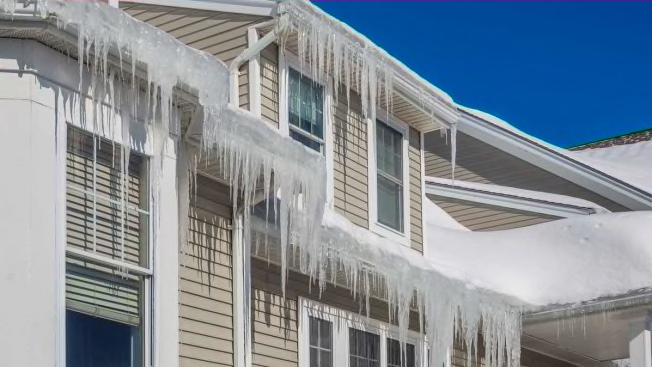
Winters in Western Washington arrive with their familiar mix of damp snowfall, persistent cold, and moisture-heavy weather patterns that challenge even the most well-built homes. Homeowners in Lake Stevens, Snohomish County, and surrounding regions face repeated winter roofing issues, but none are more destructive or more misunderstood than ice dams. These thick ridges of ice forming along roof edges appear harmless at first, yet they often lead to roof leaks, damaged shingles, soaked insulation, mold growth, and costly structural deterioration.
Many homeowners treat ice dams as a roofing issue, focusing on gutter clearing or temporary de-icing methods. But the real cause lies deeper inside the thermal envelope of your home. The most important long-term defense against ice dams is maintaining a proper attic insulation R-value, along with correct air sealing and balanced ventilation. Understanding how attic insulation in Lake Stevens works within our unique Western Washington climate is the difference between a winter convenience and an expensive emergency repair from a roofing contractor Lake Stevens WA.
Why Ice Dams Occur: The Western Washington Melt-Freeze Cycle Explained
Snow Load + Heat Loss = Ice Dam Formation
Due to frequent heavy, wet snowfall, the melt-and-freeze cycle is especially active in regions like Lake Stevens. Here’s what happens:
- A layer of snow blankets your roof during a storm.
- Warm air from your home rises and leaks into the attic through gaps, cracks, and insufficient insulation.
- This trapped heat warms the underside of the roof deck.
- Snow resting on the warmer roof surface melts from below.
- Meltwater flows downward until it reaches the roof eaves.
- The eaves remain below freezing because they extend beyond the heated living area.
- Water refreezes at the eaves, forming an ice ridge known as an ice dam.
- Additional meltwater pools behind this ridge and is forced underneath shingles.
Over time, this backward flow results in interior ceiling leaks, stained drywall, damaged insulation, and in severe cases, structural rot.
The key to preventing this dangerous cycle is ensuring the roof deck stays uniformly cold even when heating systems are running by improving your attic’s thermal resistance.
The Role of R-Value: Creating a True Cold Roof in Lake Stevens
What Is R-Value?
R-value measures how well insulation resists heat flow. The higher the R-value, the better your attic prevents warm indoor air from escaping.
In climates like Western Washington, where snow is wet and temperatures fluctuate, maintaining the proper attic insulation R-value is essential. When insulation performs properly, it traps heat inside your living space instead of allowing it to rise into the attic and trigger snowmelt on your roof.
Recommended R-Values for Western Washington
According to the Washington State Energy Code (WSEC) and best practices in the Pacific Northwest:
- Attics should achieve R-49 to R-60
- This typically requires 16–18 inches of blown-in insulation
- Homes with insulation depth under 12–14 inches are often underperforming
Many older homes in Lake Stevens still have original insulation that has settled, compacted, or degraded, leaving the attic with a far lower effective R-value. This loss of thermal resistance is a primary cause of winter energy spikes and recurring ice dams.
Upgrading attic insulation in Lake Stevens typically using blown-in fiberglass or cellulose creates a strong, high-density thermal blanket that maintains consistent roof-deck temperatures even during freezing weather.
Air Sealing: The Crucial First Step Many Homeowners Miss
Even with high R-value insulation, warm indoor air can escape into the attic through small, unsealed openings. Air leaks act like hidden vents that dump heated air directly onto the underside of your roof.
Common Air Leak Locations:
- Gaps around plumbing penetrations
- Openings around recessed lighting fixtures
- The attic access hatch perimeter
- Cracks around chimneys or flue chases
- Gaps along the ceiling top plate
Western Washington homes especially in Snohomish County often experience moisture-driven airflow due to humidity from cooking, laundry, and showers. When this warm, moist air enters the attic unimpeded, it dramatically increases ice dam risk.
Professional attic insulation projects in Lake Stevens always begin with air sealing using foam, caulk, and physical barriers. Without this step, even R-60 insulation cannot perform effectively.
Ventilation: Your Attic’s Temperature and Moisture Control System
Why Ventilation Matters
Insulation prevents heat transfer, but ventilation removes any residual warm air or moisture that makes its way into the attic. A balanced system keeps attic air approximately the same temperature as the outside environment, a critical factor for ice dam prevention.
Components of a Balanced Ventilation System:
1. Intake Vents (Soffit Vents)
Bring cold, fresh air into the attic from the lower roof area.
2. Exhaust Vents (Ridge Vents)
Release slightly warmer air that rises naturally toward the peak of the roof.
This controlled airflow flushes out heat and moisture, preventing condensation, mold, wood rot, and ice dam formation.
Common Ventilation Mistakes in Western Washington
- Insulation blocking soffit vents
- Lack of ridge vents or outdated static vents
- Undersized venting compared to attic square footage
- Unbalanced intake-to-exhaust ratios
A qualified roofing contractor Lake Stevens WA or insulation specialist ensures proper baffle installation, keeps ventilation paths clear, and designs a system that suits Pacific Northwest weather patterns.
Short-Term Fixes vs. Long-Term Solutions
Homeowners sometimes rely on quick fixes when ice dams appear:
Heat Cables
Useful temporarily but expensive to operate and do not address heat loss.
Manual Ice Removal
Dangerous and often damaging to shingles.
Chemical Ice Melt
Can harm vegetation, siding, and roofing materials.
The Long-Term, Permanent Solution:
- Air sealing all attic penetrations
- Installing attic insulation in Lake Stevens to reach R-49 or higher
- Ensuring balanced attic ventilation
Together, these create an environment where ice dams cannot form because the roof remains uniformly cold.
Why Western Washington Homes Are Especially Vulnerable
Lake Stevens and nearby areas experience:
- Heavy, moisture-rich Pacific Northwest snow
- Rapid temperature shifts
- High winter humidity levels
- Roofs with shallow pitches
- Older homes with inadequate insulation depth
These factors make proper attic insulation and ventilation essential for long-term roof protection.
FAQ: Ice Dams & Attic Insulation in Lake Stevens
1. Why are ice dams so common in Western Washington?
Because the region receives wet, heavy snow that melts and refreezes quickly, creating ideal conditions for ice dam formation when heat escapes through the attic.
2. What R-value do I need to prevent ice dams in Lake Stevens?
Most homes need R-49 to R-60, depending on attic design and existing insulation depth.
3. Can insulation alone stop ice dams?
Not entirely. Air sealing + insulation + ventilation together create a cold roof system that prevents melting and refreezing.
4. Why is attic ventilation so important?
Ventilation removes any stray warm air or moisture and keeps the attic temperature consistent with outdoor conditions.
5. Can a roofing contractor help with ice dam prevention?
Yes. A roofing contractor can perform a thorough roof inspection to evaluate ventilation, flashing, roof structure, and potential moisture risks.
6. How do I know if my attic insulation is too low?
If you see joists exposed, insulation is uneven, or depth is less than 14 inches, your attic likely needs upgrading.